The Surprising Value of PRDs in Agile Settings
Recently, I’ve noticed the agile community is turning back to product requirements documents, or PRDs for short. Templates, forum posts and tutorials are everywhere. But why the sudden spike for a document rooted in waterfall? Are we reversing the agile trend? Or is there more to it?
Renewed Interest
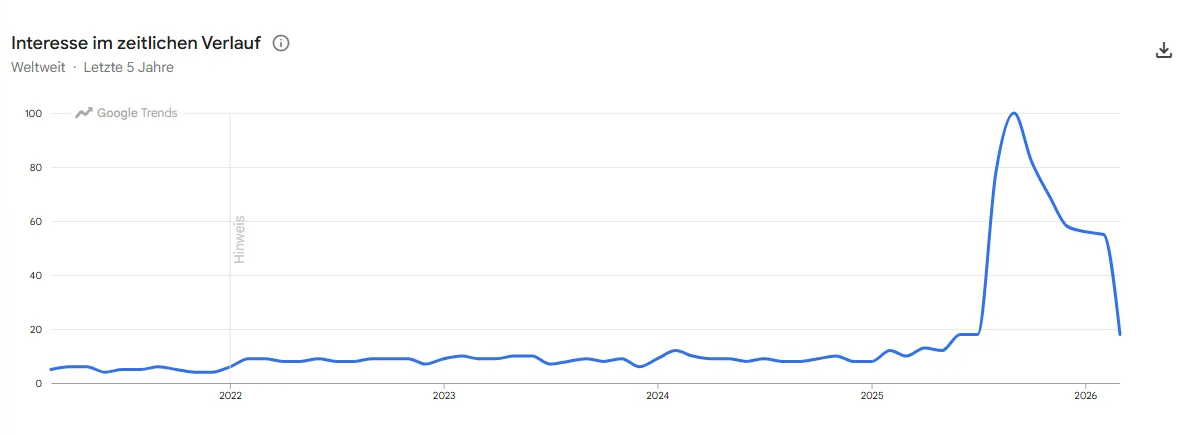
First, let’s look at the numbers. Google trends shows a massive spike for PRDs in mid 2025. It’s not just a hunch, people are actively seeking out PRDs. While it is possible that this is a trend for project management, agile remains one of the predominant methodologies in software development. In addition, looking at the material out there, most of them give an agile angle to PRDs 2 3 4 5 6 7 8. So people practicing scrum or other agile methods seem to find value in them too. So why are they back?
Why are They so Popular?
There are three main reasons why people seek out the benefits of PRDs.
Reason 1 - Funding Pressure
With the economic uncertainty in 2025, business owners and managers are choosing their investments more carefully. 9 Product leaders now face higher pressure to demonstrate value and project revenue before securing investment. A PRD is an ideal tool to outline potential market value, highlight risks and shows that product owners consider current market conditions. Of course, no document will eliminate risk, but addressing it upfront reassures decision makers.
Reason 2 - People Churn and Knowledge Gaps
2025 brought a big wave of downsizing in the tech industry. 9 Thinner teams leads to a significant knowledge gap. Documentation, including PRDs, retain knowledge even when staff is churning or being let go. In addition, leaner teams require more cross collaboration since, resources are no longer available in every location. Remote work across multiple time zones has been the norm for years, but smaller teams feel the strain more acutely. PRDs act as an anchor, helping teams to align and counter the new complexity.
Reason 3 - Faster, Leaner writing
Traditionally, writing a PRD was a significant effort. It required extensive research and alignments to get all the necessary information. The result is often pages of documentation just to capture everything on paper. Today, leaner approaches focus on the vision and outcome, but don’t detail every feature. Combined with faster AI-driven writing, a PRD can be written in hours, not weeks. Of course, the research still needs to be done, which is the real benefit of PRDs. But leaner approaches and faster writing unlocks value more quickly, with less effort.
How to use PRDs effectivley
Now that we know what drives new interest in PRDs, we can also understand how to utilize them. The key to success is getting the benefits without falling into the trap of overanalyzing and creating a project management process in an agile setup. Here’s how to do it.
Keep it light
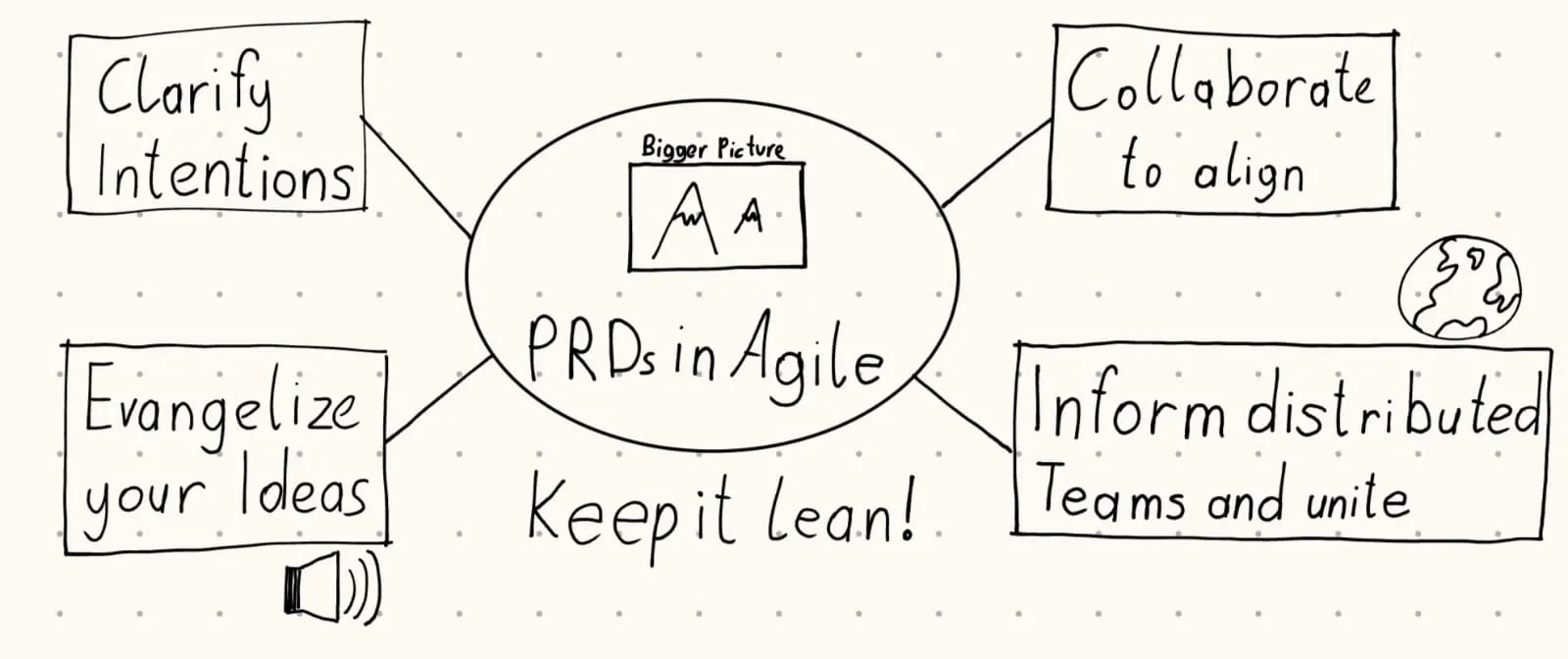
In agile, the goal of a PRD is to align on a common vision, provide the necesary context, and define the intended outcome. Most of the document should explain the user pain points, what alternatives have been tried, and how the proposed approach helps. Keep the reader in mind - if it’s too long, no one will read it. A draft list of user stories can be included at the end, but it should not be the main focus. Instead, treat it as a tool to evangelize your idea across the company and align your teams.
Make it a collaboration anchor
Writing the PRD in collaboration with tech, design, and stakeholders is essential. Think of it as the central point of collaboration - the source of truth for the initiative. Multiple viewpoints illuminate different aspects, making it a practical document. A PRD created without collaboration will collect dust, and wastes your time.
A central document also helps you unite the cross-functional teams. It’s especially useful for fresher teams, where questions about the users context or technical challenges are more frequent. It will also supports distributed teams, so information can be shared offline.
Evangelize your ideas
Once written, the PRD can become the key tool for advocating your ideas to senior management and other stakeholder. It demonstrates that your product ideas are thoroughly researched. Stakeholder-specific topics can be addressed to show their needs are met. Share the PRD wideley and often to keep the company informed. This builds awareness - the first step towards gaining support.
Clarify your intentions through writing
Writing doesn’t just product an outcome - it also helps you collect your thoughts. On paper, you can capture more ideas that you can hold in your mind. This lets you organize your thinking and clarify the logic behind your implementations. Writing the PRD strengthens your verbal communication and sharpens your responses to concerns. Even if nothing else comes of it, that alone is a tremendous benefit.
Counterarguments
Of course, there are Counterarguments for PRD’s, so lets address them:
PRDs are waterfall! They take away from the collaboration and inhibit learning. - True, if they’re used to specify every detail and then enshrined in stone, they don’t fit the agile mindset. That’s why keeping them light at the beginning is essential. The PRD should be updated to document why the path changed based on new learnings. This makes decisions more sophisticated without adding overhead.
We already have user stories, why do we need another document? - User stories show individual steps in the journey. However, they often fail to express the bigger picture. Tech teams can easily lose sight, especially if they’re not familiar with the users needs yet. Stakeholder rarely take the time to dig through individual stories to find what they need. Providing a neat package improves your communication.
Conclusion: A lightweight centerpiece for agile
So there you have it. Product reqirements documents in the age of agile product development. It seems counterintuitive at first, but using them as a lightweight centerpiece to align your initiatives around can add value to the way you manage products. It elevates communication with senior management, reduces uncertainties in a turbulent environment, and helps distributed teams align more efficently.
Have you tried them already? Or are you willing to try them for your next initiative? Take a moment to reflect on how they could fit into your workflow.
Footnotes
-
https://trends.google.com/explore?geo=Worldwide&q=product%2520requirements%2520document&q=product%2520requirements%2520document&date=today%205-y ↩
-
https://plan.io/blog/one-pager-prd-product-requirements-document/ ↩
-
https://www.notion.com/templates/product-requirement-document-prd-115 ↩
-
https://www.leanware.co/insights/how-to-write-a-product-requirements-document-prd ↩
-
https://www.perforce.com/blog/alm/how-write-product-requirements-document-prd ↩
-
https://www.figma.com/resource-library/product-requirements-document/ ↩
-
https://www.halo-lab.com/blog/how-to-write-product-requirements-document ↩
-
https://www.mckinsey.com/capabilities/strategy-and-corporate-finance/our-insights/economic-conditions-outlook ↩ ↩2
Last modified: 16 Mar 2026